I must create a system, or be enslaved by another man's. I will not reason and compare: my business is to create.

- William Blake

Tuesday, November 17, 2015

D&D 5th Edition: Bringing balance to the Forge. I mean, Force.

If you have been reading this blog, you know that I frequently post about 5e and BD&D. Those are my favorite versions of D&D, but they are not that similar to each other. If you asked for my favorite right now, I might say BD&D, because I find it a bit easier to house rule than 5e.

Still, I'm playing 5e most of the time. 

So I would like to talk about that for a moment.


5e has been called by some people "everyone's 2nd favorite edition", and I think there is at least some truth to that.

Not because 5e is second best overall, but because it is second best in lots of stuff. For example, it has the best fighter/caster balance other than 4e. It is also the simplest version of D&D other than some variation of BD&D. It has several options for classes, but not as many as 3e (4e had lots of options that followed few different templates, which is cool too). And so on.

It has been said that 5e is unfocused; it doesn't know exactly what it wants to be. Well, it is quite sure it wants to be D&D, but how? By creating an interesting story, like some modern games? By building exciting and tactical combat encounters, like 4e? By careful resource management, like OD&D?

The answer, of course, is: none of this. 

Take the Inspiration mechanic, for example: it is a nod to modern games, such as Fate, but a limited one, since you can get no more than one point of Inspiration. It is quite impossible to create a "fate point economy" or plan your game's ups and downs around Inspiration.

Same thing can be said about combat. There are some tactical options (some classes more than others), and enough information to allow you to play on a grid, but there is not enough elements to allow you to play with the grid (shift one square, push your opponent two squares to the left, flanking, etc). 

Spells? Most unique spell system in D&D... other than 4e. Weapons? Simplest system since BD&D. Etc. 

So, D&D 5e tries to do many things at once. This is its biggest weakness, but also its greatest strength.

You see, some of the other editions were more focused on one aspect or another. Old school D&D was largely about resource management, 3e was focused on detail and customized character creation, 4e was focused on tactical battles, etc. 5e is a bit... everywhere.

The thing is, I actually like it this way. I prefer a "jack of all trades, master of none" D&D than one that is very good in doing one thing above others. I like some tactics, but don't want every combat to be focused on miniatures. I like customized characters, but the number of skills in 3e gives me headaches. I like some resource management, but don't feel like playing a game where you supposedly "CAN NOT HAVE A MEANINGFUL CAMPAIGN IF STRICT TIME RECORDS ARE NOT KEPT" or count encumbrance to the coin.


In short, I like to change the focus of the game from one scene to another, which is one of the things I like in RPGs. In that aspect, The Forge's notion that RPGs should be focused on one aim over to others doesn't work for me. I prefer some balance.

Now, 5e isn't MY perfect version of D&D. I would like to see some additional rules on morale and hirelings, maybe domain management, and would like some things (including classes) to be even simpler. Skills don't work well in modern D&D, and 5e makes it worse with bounded accuracy. 

Lastly, I cannot say that all this stuff is intentional. Like others before me, I sometimes think 5e just tried to combine some (but not all) of the best parts of other editions, using whatever they liked most at the time. 

And I'm not saying that 5e's apparent lack of focus is necessarily a good thing; I'm just saying that it works for me (well, most of the time). This has very much to do with personal preference; I realized that I my favorite versions of D&D (and other RPGs) are less focused than 3e, 4e or 0e, for example.

Of course, there are also places where 5e might be better than ANY version of D&D to date. I am a big fan of the action economy, for example. The exhaustion mechanic might have multiple interesting uses. Backgrounds work well, at least for some styles of play, and I like how most archetypes are built. And 5e has kept some popular items such as ascending AC and few extra HP, things that are common in the WotC era but also adopted by early house rules and some retroclones.

In any case, for now, a heavily house ruled version of BD&D would still be my favorite.

But not for all of most of my group. Some prefer the "modern" versions of D&D for a reason or another; one prefers 4e and likes combat, other likes character building and 3e. There are some that don't care or just want something simple

Still, we could all agree on 5e, and are having a great time with it so far. One player said "D&D is awesome" after playing 5e for the first time. He had played many other editions but had been playing other games (Savage Worlds, W40k, Star Wars by Fantasy Flight) for a while.

Our experience is certainly not unique; there is a whole lot of people involved in the OSR, for example, that praised 5e, and even created material intended for both OSR and 5e (or something called "O5R"). Same with people that enjoyed every other edition. 

It isn't universal, as well; there are plenty of people that criticize 5e, some pointing that it is their least favorite edition. Not taking enough hints from 4e is a common complaint (like the one I did for BD&D, above; surely there are people that fell the same for 3e, AD&D, etc), although the greatest fan of 4e in my group now has 5e as a favorite.

I don't know how long will this last, but "bring balance to the Force, 5e did". 

At least for us.

Friday, November 13, 2015

Old School Ramblings #1 - Play Now, Story Later

NOTE: This series of articles are about what old school means to me and what I like about old school games. As you can see, my understanding of Old School isn't strictly chronological, and might be a bit unorthodox and opinionated. You're welcome to comment, disagree, and add your own opinions in the comments section.

The definition of "old school gaming" is a contested one. There are many interesting opinions out there, including the ones here. I would like to share some of those and some of my own. Eventually, I will discuss the ones described by Matt Finch in his Primer, which carries a great importance in the definition of OS. Although I might differ in some points, it is a very enjoyable read that I would recommend for anyone interested in OS gaming.

One aspect I really enjoy and identify with old school gaming is what I call "Story Later". This is a way to distinguish OS games from more modern RPGs that are focused in creating a narrative with beginning, middle, end, climaxes, cliffhangers, etc.

(Yes, the term is inspired by this article by Ron Edwards; I think my conclusions are quite different, thought. Instead of writing careful counter-arguments for a twelve-year-old article that has been discussed more times than I can count, I think it will be more interesting to talk about my own experiences. Since I don't fully subscribe to the theory, I see no need to adopt the jargon as well).

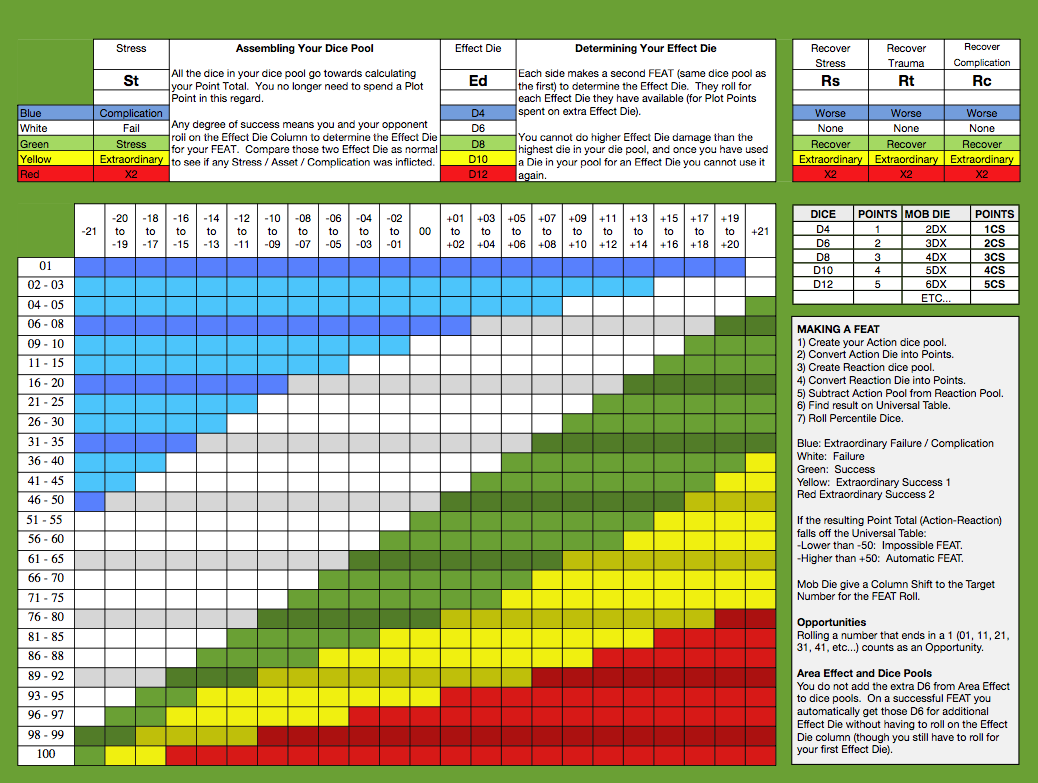
Some RPGs have mechanics to enforce a story "flow"; Robin Laws, one of my favorite designers, has created great games based on the idea that a session should be managed with "ups and downs" similar to the ones you can see in a play or a movie, for example. Other examples are Fate RPG and Lady Blackbird, games where the management of meta-game currencies (dice pools, fate points) makes you more likely to succeed after you fail many times and vice-versa. D&D 5e has something similar, to a limited extent, in the Inspiration mechanic.

By Robin Laws - source.

Although those mechanics may sound new, the idea of focusing on stories in RPGs isn't a new one. James Maliszewski, who affirms that Dragonlance "ruined everything", puts it this way (emphasis mine):

"No longer were adventures "modules," implying they could be swapped in and out of campaigns with minimal impact. Now, they had to tell a coherent narrative that was dramatically satisfying."

James points similar approaches in the Desert of Desolation and Ravenloft modules, for example. His stance is a critical one, although he recognizes the success of that approach at the time.

There is an important distinction to be made here, so you don't take this the wrong way. This early "story" modules are described as "railroad-y", meaning the players had little input in the story. Railroading has become some kind of offense nowadays, even though that are still people that don't mind it - although even of those people would probably be appalled by the idea of a PC dying by GM fiat. Now, I don't like railroading, but I will not tell others how they should play their games.

The important thing to keep in mind for the folks that eschew "story" is that railroading is not the only path to story creation. The "modern" games I mentioned above are great example on how to encourage story "flow" without resorting to railroads (some would say that they are incompatible, as there is no story creation if the story is already written). I would even say that this methods are better than the ones originally used by Dragonlance, at least for my tastes. The downside is that the "climaxes", resolutions", etc, aren't guaranteed without previous planning, but clever mechanics may enhance the probability that they should happen at the right time.

I think one way to explain the success of the "story" is that "a coherent narrative that is dramatically satisfying" is not a bad thing. In fact, it is often the way our brain works. We naturally expect such things, and I would dare to say that they can make our games a lot more fun - whether old school or new school.

Here is how Nassim Nicholas Taleb defines the narrative fallacy in The Black Swan:

The narrative fallacy addresses our limited ability to look at sequences of facts without weaving an explanation into them, or, equivalently, forcing a logical link, an arrow of relationship upon them. Explanations bind facts together. They make them all the more easily remembered; they help them make more sense. Where this propensity can go wrong is when it increases our impression of understanding.

The thing is, because our brains work that way, you don't actually need to pursue a narrative in order to create one. As far as my own experience goes, there is a natural pull towards "story" even among people that eschew the idea.

This is a point where I disagree with Edwards, as I think that story WILL, in fact, "consistently emerge from play that does not prioritize it". You see, story will even consistently emerge from our lives, because this is how our brain works. Our lives aren't stories, but simple sequences of events; still, when we think about the past, we cannot help but creating stories.

Whats more, we are creating stories during the events. I am having a change in my job next year, and I have thought a millions times about "how it will end". But it will not "end"; some things will happen, some things will be different, but most things will just continue, No true "resolution" other than the one I create in my head.


I believe this happens during old school games as well. Even if you character doesn't have a name, or dies in the first "scene", you will usually be thinking about what happens next, and will inevitably create a narrative to suit the events.

The difference, then, is one of focus. Old school players, the way I see it, aren't focused on creating a story during play, but they subconsciously create a narrative during the story anyway.

The question that arises is: are there any guarantees that the story will be "coherent" and "dramatically satisfying" enough? For me, the answer is NO, not necessarily - specially if viewed from the outside. In fact, games focused on creating stories might, well, create better stories (and that is a whole different thing, one I can enjoy too).

Think of it this way: I'm a regular guy. If I tell you some stories about my life, it might bore you to tears. Still, these stories are interesting to me because they happened to me. I didn't find a soul-mate, got a job, traveled around, etc, to create stories, but, ultimately, to be a part of something. If I were focused on creating a narrative during the events, I think it might detract from the whole experience; but the stories I can tell about such things are usually easier to remember than most stuff I have read from C.A Smith, R.E Howard and others.

Old school gaming, for me, is like that: it creates interesting stories not because they follow a three-act structures or use effective plot devices, but because we are focused on participating as they as they happen.

We have fun now, and tell stories later.

Monday, November 09, 2015

One table to rule them all - using 2d6 [or 3d6] for everything in D&D

Last week, I proposed a new method for D&D skills (you probably should read the original post to understand this one). Although I admitted a few weaknesses of such method in the end of the post, the most common critic I received was this: "looks fine, but you would have to check a table for every roll".

I hear you. To be honest, I dislike most tables too, specially tables with nothing but numbers, and checking a table for every roll isn't something that sounds like fun (I had my share of Rolemaster adventures back in the day).

Now, the system was created mostly for people that are so used to the Basic modifiers that they wouldn't need to check a table at all. And, to be fair, just by comparing you mod to the DC, you can tell success from failure most of the time. If the DC is higher than you bonus, you must roll at least 13 to succeed, and if its lower you can only fail if you roll 8 or less.

If I were to create a new system from scratch instead of using the Rules Cyclopedia, I have to admit I would go for something simpler, but that's not the point here - I specifically want to use the bits of the RC I enjoy, maybe by streamlining them a bit.

So, my the solution to "I have to check a table" is this: you should only have ONE table, so it will become so familiar that you'll never have to check.

Again, I dislike the idea of "unified" mechanics for combat and skills (I think it is a fallacy; this deserves a whole post of its own, and I'll write it soon - for now, you can read some of my ideas here); on the other hand, I think LOTS of tables could be unified to make them easier to deal with. But, for D&D, the unification should be around 2d6, NOT the d20 as "modern" D&D wants to do (read on). You see, there are lots of rules in the RC that orbit around 2d6: morale, turn undead, monster reaction, weather, hiring companions, etc, and I'm certainly not the first one to suggest that some unification is in order.

So, lets take the monster reaction table. I prefer Moldvay's table than the one in the RC. although they are similar. It goes more or less like this:


Roll Result

2 Immediate attack

3-5 Hostile

6-8 Uncertain, confused

9-11 No attack, monster leaves

12 Enthusiastic friendship


It is quite easy to extrapolate a general resolution table from this. When rolling 2d6, 6-8 happens quite frequently, almost 50% of the time, so we can take this as the "average" or "expected" result, with 2 and 12 being very bad or very good results instead. For example:


Score Modifier Description

2 -2 Terrible, disaster

3-5 -1 Poor, worse than expected

6-8 0 Average, as expected

9-11 +1 Good, better than expected

12 +2 Great, unexpected perks


With this in mind, you can use the exact same table for many different situations, The RC already does this, to a point; "unifying" this chart it is just the logical next step.

For example, the retainer reaction table is very similar to this (yes, I replaced "roll again" for "tries to bargain"):


Roll Result

2 Refuses, insulted (-1 to hire others)

3-5 Refuses

6-8 Tries to bargain

9-11 Accepts

12 Accepts, impressed (+1 to morale)


You don't need a new table to turn undead; you can use the exact same table. Start with the "average" or "expected" result: the undead are turned. From reading the RC, you can find out what a good or bad result looks like (the undead might be destroyed or immune to turning). The result might look like this (roll 2d6 + cleric level - monster HD):


Roll Result

2 This undead can never be turned by you (disaster)

3-5 This undead cannot be turned right now (poor)

6-8 Turn 2d6 HD of undead, minimum 1 (average)

9-11 Destroy 2d6 HD of undead (good)

12 Destroy 3d6 HD of undead (great)


As you can notice, you can easily make the water movement modification using a similar method:


Roll Result

2 No wind

3-5 Breeze (halve speed)

6-8 Normal wind

9-11 High winds (double movement)

12 Gale*


(* I used "Gale" to be faithful to the RC, but since i is a negative result, it should happen on a natural 2; since this table isn't testing a characters skill but only the wind, you can use it either way).

And, again, you shouldn't need a different table for gifting Immortals like the on on RC, for example: just consider the "expected" result (Immortal accepts gift) and go from there.

The advantage of using the same table for everything is familiarity; you might check the table, but the idea is that you get so used to it that you don't need to.

And universal tables are fun!
So why I prefer using 2d6 to a d20 or d6?

First of all, of course, because many tables in the RC are already like that. But another thing to keep in mind is that I use the 6-8 range for the "expected" results. These should happen more often than the other "unexpected" results, which is easier to do with 2d6 than with a d20 - a natural 20 happens 5% of the time, while "snake eyes" in 2d6 happen 2,7% of the time.

And why 3d6?

The thing is, you don't need 3d6. In fact, 2d6 tables would be easier to manage, easier to create (they are already in the RC after all), and 5 possible results might make more sense than seven. The cool thing about using 3d6 is that I can add extremely unexpected results, things that would happen less than 1% of the time for ordinary characters. The truly remarkable, sometimes absurd, stuff. The other advantage, of course, is using the same table for ability modifiers and for everything else. Here it goes:


Score Modifier Description

3 -3 Abysmal, disastrous, everything is lost, beyond repair

4-5 -2 Terrible, no chance, try a different approach

6-8 -1 Poor, little worse than expected

9-12 0 Average, Neutral, as expected

13-15 +1 Fair, better than usual

16-17 +2 Good, got more than expected

18 +3 Great, impressive success, unexpected rewards


And here are some uses for it (very brainstorm-y stuff, untested):

Monster reaction


Roll Result

3 Attacks immediately, fights to the death

4-5 Monster attacks

6-8 Monster is aggressive

9-12 Monster is cautious or suspicious

13-15 Monster is neutral, willing to talk

16-17 Monster is friendly

18 Monster is surprisingly helpful


Turn undead


Roll Result

3 Forsaken by your deity!

4-5 Disaster, undead can never be turned by you

6-8 Failure, undead cannot be turned right now

9-12 Turn 2d6 HD of undead (minimum 1)

13-15 Destroy 2d6 HD of undead

16-17 Destroy 3d6 HD of undead

18 Destroy 4d6 HD of undead


Retainer reaction


Roll Result

3 Someone you hired will betray your trust

4-5 Refuses, insulted (-1 to hire another)

6-8 Refuses

9-12 Demands better offer

13-15 Accepts

16-17 Accepts, impressed (+1 to morale)

18 You hired someone remarkable; you'll see.


Icy mountains weather


Roll Result

3 Avalanche!

4-5 Snowstorm

6-8 Heavy snow

9-12 Cold as usual

13-15 Nice day, little snow

16-17 Snow is melting, sun is out

18 Looks almost like spring


Spell casting (3d6 + MU level/2 - spell level; use with this if you want)


Roll Result

3 Fumble, Corruption, Madness, etc

4-5 Fumble, cannot cast this spell again today

6-8 No effect

9-12 Spell works as expected

13-15 Spell doubles distance, duration or # of targets

16-17 Spell quadruples distance, duration or # of targets

18 Earth-shattering effects


Next encounter


Roll Result

3 Roll initiative!

4-5 Next encounter happens in 1 day

6-8 Next encounter happens in 2 days

9-12 Next encounter happens in 3 days

13-15 Next encounter happens in 5 days

16-17 Next encounter happens in 7 days

18 No encounter this week, roll again in the next


Morale


Roll Result

3 Unconditional Surrender

4-5 Rout

6-8 Fall back

9-12 Hold / Parlay

13-15 Press

16-17 Fight on!

18 To the death!


Wrestling


Roll Result

3 Fumble

4-5 Prone

6-8 No effect

9-12 Grab

13-15 Take down

16-17 Pin

18 Submission


Ok, I got a bit carried away. As you have noticed, this is quite fun to play with, at least for me. Let's see what you can come up with!

Addendum: dice pools and some math stuff.

The system I proposed last week came, in part, from a dissatisfaction about how the math works when you add a modifier to a d20 roll. In short, the modifier is not very relevant. If you use 2d6+modifier, modifiers are a bit more relevant, but still not enough for me. Obviously, if you use 3d6+modifiers, it is even worse than 2d6+modifiers. 1d6+modifiers is good, but you lose the bell curve. Last week's idea is sound for skill systems, but makes the "unexpected" part of the tables above quite expected for those with big modifiers.

An alternate way of making modifiers matter but still keeping within the limits of 3d6 is using a dice pool. If you have a +2 STR modifier, for example, you roll 5d6 (3d6+2d6) and keep the best three dice. Messing with the pool is easy: take a die away if the task is hard, remove another one if untrained, add a die if you have some advantage, add two if you're an expert, etc.

Even with lots of dice, the unexpected results remain somewhat unexpected, and failure is always a possibility (no matter how infinitesimal). And the cool thing about dice pools is that you can move dice around - you can keep an unused 6 to get a bonus in a related task or add a descriptor to the current one, etc.

One last note: whenever you roll twice in the same table, the first roll should affect the second positively or negatively; see the monster reaction table in the RC, for examples. Thus, you can use the modifier from the first roll to the second roll instead of the ability modifier (since it was already taken into account). For example, if you rolled 14 on the monster reaction table, and the GM tells you to roll again for some reason (better offer, situation has changed, etc), you should roll 4d6 (3d6+1d6). This works very well for weather tables, too.