I must create a system, or be enslaved by another man's. I will not reason and compare: my business is to create.

- William Blake

Tuesday, December 14, 2021

Brazilian monster sketches (Rick Troula)

So, here is my next project: a collection of Brazilian monsters for 5e (might do an OSR version if there is enough interest). These first project is focused on folklore, urban legend, and maybe some prehistoric animals. We hope to have it finished late next year. I will keep you informed. 

I might write a few original monsters with Brazilian flavor later on (unfortunately someone already invented a macawbear, lol) or maybe even an hex-crawl... 

As always, any feedback is useful!

We are at the first stages, but I hope I can share a few monsters soon... Some of these are surprisingly dark, others are very weird, but all look like fun to have at your table. We've got killer anteaters, flayed tapirs, demonic sows, alligator witches, fire-breathing goats, giant sloths, burning anacondas covered in eyes... cool stuff!

The finished book will be full color.  We've got some great artists working on this project - the art below is from Rick Troula. Take a look - and follow my blog, Rick, Pedro, Thay, and Iago on Instagram! For now... let's look at some sketches!


Saturday, December 11, 2021

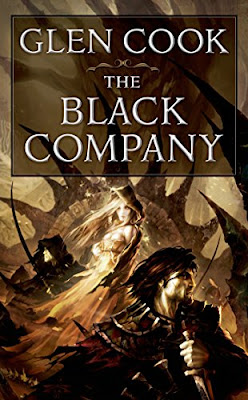
The Black Company (dark fantasy book review)

I've read quite a few books in 2021, but almost no sci-fi or fantasy. So I asked some recommendations from MeWe, and my friend Jens from The Disoriented Ranger (check his blog!) recommend me this one. Well, I'm all about dark fantasy, and I share many tastes with Jens, so here we go!


From Wikipedia:
The Black Company, released in May 1984, is the first novel in Glen Cook's ongoing series, The Black Company. The book combines elements of epic fantasy and dark fantasy as it describes the dealings of an elite mercenary unit – the Black Company – with the Lady, ruler of the Northern Empire.
BTW, while I'd usually avoid an "ongoing series", I get the impression that the first trilogy completes some kind of cycle. And the first book can be enjoyed by itself, even if you don't read the rest.

I've found the book fun, but not especially well-written. My copy claims the book is a mix of Tolkien and Bernard Cornwell (somewhat like George RR Martin, I guess) but these three authors are far superior. This might be an unfair comparison, since they are some of the greats. This is somewhat comparable to the first few Witcher books, but so far I think I enjoyed the Witcher a bit more.

The book is told in-character from a "military" point of view. Cook spent time in the army, and it shows. The narrative purposely resembles the account of a modern soldier.

The characters are a little shallow, the action and war scenes a bit rushed and confusing, and the plot twists relatively predictable. Monsters are few and not particularly interesting. The villains are very reminiscent of Sauron and the Nâzgul (with added intrigue and betrayals, which is cool)... The twist, here, is that the Black Company is fighting on their side!

On the other hand, the book is easy and pleasant to read. I couldn't put it down and ended it in a few days, unlike many more recent fantasy series.

If you want to mine the book for RPG ideas (and there was a Black Company RPG published in 2004), you'll find some useful stuff here. The "mercenary company" structure seems perfect for adventuring. It has all the upsides of a military campaign with a bit more freedom, side quests and sketchy characters.

In short: 
Interesting book, but I wouldn't add this to my favorites, at least in this first iteration. I plan to read the second one to see where this goes!

Post Scriptum:
Just found out that Gygax recommended this book!
In Dragon magazine issue 96 (April 1985), Gary Gygax wrote this about The Black Company which is what inspired me to seek it out originally. Anyone else read this way back then?

"A good “game” book If you haven’t read The Black Company by Glen Cook (Tor Books, Tom Doherty Associates, Inc., 1984), then you are missing a good book which relates closely to the AD&D® game. I can’t swear that the author plays FRP games, let alone any of TSR’s offerings, but somehow he has captured the essence of them, regardless. The Black Company reads as if it were a literary adaptation of actual adventuring, as it were, in a swords & sorcery milieu akin to that of a proper AD&D game campaign. The style of writing is neither heroic nor swashbuckling. There is none of Robert E. Howard in the book. It is a dark work. Nevertheless, it is one fine bit of fantasy authorship. I recommend it to all role-playing game enthusiasts for many reasons, not the least of which is that it will assist in proper fantasy role-playing. For $2.95 this book will provide both reading enjoyment and much support for your RPG activity. It is one you shouldn’t miss."

Friday, December 10, 2021

Table tools, booklets, and Into the Unknown

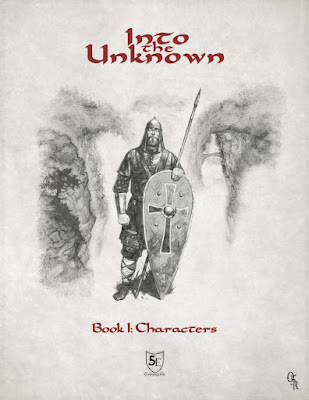
Into the Unknown is a remarkable game. It basically boils down the most relevant parts of 5e into small booklets (Characters, Playing the Game, Magic, Monsters, etc.) and gives it an OSR feel, close to Moldvay's Basic. It is a very abridged version, and the only reason I can see to choose 5e over ItU is if you like lots of options (for races, characters, classes, etc.). 

ItU goes to level 10 instead of 20; I don't see it as a big downside, since these are my favorite levels (and good enough to run most existing campaigns). I'm considering doing the same for my "minimalist 5e".

(As an aside, ItU is 5e-compatible with OSR flavor; my Dark Fantasy Basic is OSR-compatible with some 5e flavor. You can use ItU to run 5e campaigns and DFB to run OSR campaigns, for example).


Anyway, this is not a review. It is the booklets I want to talk about here. I've written a few booklets on different topics myself, but my "ultimate" goal is to one day publish a beautiful, full color, thick, hardcover book with a complete system - including PCs, monsters and DM tips. My inspiration is the Rules Cyclopedia, probably my favorite D&D book.

I imagine this would look good on my shelves... however - and that's the point I'm trying to make - it might not be the best tool for running the game on the table.

The traditional D&D format - PHB + MM + DMG is cool too. But when running a 5e game, I have a few issues with page-flipping. First, we could use a couple of PHB, at least, if everyone is creating PCs at once. Finding classes and subclasses is easy - picking spells takes a bit longer, and finding them during a game a bit more (just write down the page numbers). Wouldn't it be nice if we had a separate book of spells?

During the game, I feel these big books get a bit unwieldy. I do appreciate having hundreds of monsters, but I'll rarely use more than a dozen in a session - usually two or three. Going from level 1 to 20 is cool... but as I've said, most my campaigns end around 10, and almost none go past 15. Makes me wonder if levels 11-20 should be in a separate "epic" PHB.

The DMG is another thing. It is full of tables and tools to use at the table... and also advice on how to create your own planets and pantheons, something you probably won't read during a game. Maybe we should pair magic items with other items and not with DM advice?

In short: these books are not optimized to use in the table. Fortunately, we have various tools that are.

- Characters sheets are an obvious way to reference information. I do think that 5e PCs have so much information that it is hard to keep it all there, unless you memorize most of the powers - or go through the book to find them. Copying things with pencils feel disorganized and ugly - but also "liberating" since you can add house rules, exceptions, etc.
- Playbooks in the vein of Dungeon World. A pre-written character sheet for each class, including all the options you can take. Making a feat choice is just ticking a box.
- Cards are great for monsters, items, etc.
- Online tools: this is probably where all this is going. D&D has its own, but when I need to look something up at the table it is usually faster to just google it. In addition, character builders are very useful.
- DM Screens are something I usually avoid because I object to the idea of hiding my rolls. However, they can be a very useful compilation of tables and rules.

I find that booklets might be one interesting way to have books that are easy to use on the table. ItU was apparently made with this in mind:

 The game is divided into five digest-sized booklets, optimized for use at the gametable:

  • Book 1: Characters holds all you need to quickly create a new character (52 pages)
  • Book 2: Playing the Game has all the essential rules for players to get going (28 pages)
  • Book 3: Magic is strictly for those players whose characters are spellcasters (54 pages)
  • Book 4: Running the Game has everything a Game Master needs for running old-school games (85 pages)
  • Book 5: Monsters holds a selection of ready-to-use critters, complete with morale scores and treasure types (65 pages)
These are all laid out and edited to be as quick to scan and find what you are looking for at the table as possible- no more getting bogged down by looking things up in play!
I like this idea. Notice that the GM book is the biggest one - and you can get it out of the way when you're playing.

There is probably something to be said about how cheap the books are (you can get the whole thing in print for 25 bucks). If you're actually going to use them a lot, this is specially important. Fancy, expense books are often made to be admired in a slower pace (again, I have nothing against them - I love beautiful books, especially with lots of monsters... even if they go mostly unused).

You could could even further. For example, big campaigns would be a lot easier to run with booklets - as WotC realized in the "deluxe" version of Curse of Strahd. No more page flipping between the table of encounters, the encounters themselves and then the monster stats.

I'd like to see that trend continue.

In short...

Big, expensive books are cool and attractive, both to old players and new. But if you are actually going to run these games, you might look into other tools.

These are all Affiliate links - by using them, you're helping to support this blog!

Tuesday, November 30, 2021

Hexcrawl x Pointcrawl - when to use them

I've been through this a couple of times but I think it is worth a quick summary. 

I'm not going through definitions here. Let's just say that a hexcrawl means exploring a territory that is divided by hexes, with no clear paths, and a pointcrawl means exploring a territory through preexisting paths and points of interest. 

This is a typical hexcrawl map (source). Notice the lack of clear paths. We might have to count hexes to know the fastest way from k2 to k6, and we don't know if there is a road; this indicates that important details are missing form the map.


This is a typical pointcrawl map (source). You cannot make your own path; to get from Gettysburg to Grafton you must pass through Harper's Ferry.

You can have both at once (source):


Notice that some regions (upper right) have no clear paths. it's up to the travelers to choose their own way. For other places, there is usually no reason to avoid the roads; but we still have to calculate how long each road takes.

When to use each?

Well, I'm convinced that pointcrawls are more useful and hexcrawls are only good for an specific (but very popular) type of campaign: one in which the PCs go exploring the unknown wilderness beyond civilization.

Pointcrawls, on the other hand, are useful if you're dealing with roads, cities, caravans, or even when going though the wilderness with a guide; if the guide knows a place, it knows a good path to this place. A dungeon, with rooms and corridors, resembles a pointcrawl.

One thing about pointcrawls is that you should focus on paths, instead of only points of interest. How does the Old Road look like, and what kind of creatures use it, how long does it take to travel it? Etc. 

This kind of information is also important for any hexcrawl that uses roads or trails; why count hexes every time you go through a road instead of having these numbers beforehand?

And this forces you to think about the journey itself (or "expeditions"), which is good. You can estimate the duration of your travels. You can keep "STRICT TIME LIMITS" in a meaningful way.

As I've said before, Curse of Strahd should be a pointcrawl. Tomb of Annihilation would be a mix of both; the PCs rely on guides, so the paths should be previously known until they go out on their own. Descent into Avernus could be either; the abstract territory of Avernus shifts and changes.

The problem with pointcrawls, of course, is that you usually have fewer tools when you go "off the road" or get lost. However, this is not hard to calculate, and if you use the same way more than once you can add a new path to your map. The paths that already exist are used often even before you arrive; making new ones could be part of the adventure.

What about urban adventures? Well, most of the times they are neither. We are not dealing with wilderness, obviously, but streets are not exactly roads either; the path you take from point A to point B is often unimportant in most of our city dealings (barring ambushes, etc.). Maybe city adventures must be construed as a web of events or NPCs instead of places, but that's the subject for another post. If the city is in complete chaos or ruin, an hexcrawl might be a better fit, provided "zones" of the city are more important than specific streets.

Recommended reading:

http://hillcantons.blogspot.com/2012/01/crawling-without-hexes-pointcrawl.html - start here. this is the post that started it all AFAICT.

Thursday, November 25, 2021

Black Friday/Cyber Monday Sale DTRPG sale

DTRPG is making a Black Friday/Cyber Monday Sale.

It includes more than 12.000 titles... but don't worry, I'm here to help! Here are some of my favorites. They'll have special deals Friday and Monday.


Cyber Monday - best discounts

There are six special discounts for cyber Monday. They all look very cool, although I haven't played any. Mörk Borg looks amazing; as far as I know, the systems is ORS-ish and cool, although I haven't found anything that particularly attracts my interest other than the art and layout. Might get it anyway. Warhammer Age of Sigmar, Dissident Whispers, Wolves of God, Kamigakari: God Hunters, and Savage Worlds Adventure Edition are also 60% to 70% off.

Classic D&D

Some of my favorite classics are on sale, so I'll repeat what I've said before...

The D&D Rules Cyclopedia (Basic) is my favorite "all in one" book in the history of D&D. If I could only choose one book to run a campaign, it would probably be this one.

The Monstrous Manual (2e) is my favorite D&D monster book. Maybe because of the art, or nostalgia, or the amount of lore and relatively small stat-blocks.

The Dungeon Master's Guide (1e) is one of the best ever written. It has a few oddities, but it is amazing to see how much of 5e (and all editions) were already in here. Even the appendixes can generate lots of ideas... the bit on demons inspired my Teratogenicon.

The D&D Basic Set Rulebook (B/X ed.) (Basic) is the best D&D book for its size (about 64 pages). It contains multitudes despite being so small. It is the book that inspired Dark Fantasy Basic.

Planescape is another classic setting that you can get in PDF or print. Unfortunately, I haven't found Dark Sun or Ravenloft stuff in this sale...

OSR

Most stuff I've found in this sale is from Goodman Games. In addition to the amazing Dungeon Crawl Classics RPG (DCC RPG), I really like The Dungeon Alphabet and The Monster Alphabet - they are near system-less and full of awesome stuff. I STILL haven't read How to Write Adventure Modules That Don't Suck but it is also on sale.

Worlds Without Number is probably the hottest "new" (released in April) OSR title on sale. I have only read the free version briefly, but seems very good overall, and I've appreciated many other titles form the same author.

Several Old School Essentials titles are also on sale.

D&D 5e and compatible


Also, I'll recommend the Kobold Press stuff... WITH ONE BIG CAVEAT: there is also a huge Black Friday sale over Humble Bundle where you can get all this stuff a lot cheaper. But if you want a book or two (or maybe you have some DTRPG credit like me), check Creature Codex and Tome of Beasts (both for 5th Edition). I have both and they are amazing.

BTW, the Dungeon Masters Guild is having a Black Friday sale too. You can find loads of 5e stuff there. One I can recommend is the Tomb of Annihilation Companion; you can find similar stuff for ALL official campaigns and they are often very useful.

Other things

The curious and recently released Pathfinder® for Savage Worlds Core Rules is also on sale... Now, I'm not a big fan of EITHER game, but this strange combination feels like the perfect amount of crunch for me. Might have to check it out.

My stuff!

My books are not included in this sale, for some reason. Anyway, I've just made a 50% discount for my OSR adventure The Wretched Hive; it will cost only 1.99 until Cyber Monday at least. 

100 Undead was already on sale (also 1.99), and I'll keep it till Monday too. I just noticed a recent positive review! Yay!


Teratogenicon is still at a special price if you buy print+PDF (if you already have the PDF, you probably received a discount coupon for the print version when it was made availiable).

These are all Affiliate links - by using them, you're helping to support this blog!

Thursday, November 18, 2021

Teratogenicon - print version now available!


TERATOGENICON - our most impressive book so far - is a collection of tables and essays on how to create your own monsters.

It contains one chapter for each of the fourteen most famous monster types (aberrations, beasts, celestials, constructs, and so on). Each chapter examines specific habits, appearance, goals, traits, powers, origins, and many other topics. In addition, the appendixes will help you to create stats (for both old school and contemporary games), to roleplay monsters, and to include all monster types into a coherent whole, among other things.

The book is beautifully illustrated by Rick Troula (of The Displaced fame). Take a look at the previews to see for yourself!

After analyzing all the POD (print on demand) options, we've chosen to make the book available in softcover, in two versions: Premium Color Book and Standard Color. 

Both look awesome in print! The premium version looks sharper, brighter, with vivid shades of gray (see below). The paper feels glossier. The standard color is darker - both art and text - but the quality and resolution are mostly maintained.


We've decided to reject the B&W version, as the price difference is too small to justify a (slightly) lower quality (and some text/art visible through the back of the pages) for such a beautiful book. We've also decided that the book is too thin for hardcover, which would also make it more expensive. In both cases, if you have a different opinion, let us know!

As promised, we've sent previous costumers a discount coupon today. If you haven't bought the PDF before, you can buy both the PDF and the print version at the same time at a discounted price (we will keep this price for a week, at least). As always, you can buy bundles of our digital products for a great price. 

Monday, November 15, 2021

Inverse Ravenloft

I've been reading Van Richten's Guide to Ravenloft. I know I'm late to the party, but I'm probably writing a review soon. If you want the TLDR: it is better than I thought. The art is not great (everything lookss a bit grey and computer-generated for my tastes), but the writing is above-average for WotC.

Anyway.

I got me thinking about an old idea I've read somewhere about "Inverse Ravenloft". 

Ravenloft is located in the Shadowfell, the depressing plane of shadow, nightmares, etc. It's inverse is the Feywild, the brightly-colored home of the fairy, dreams, and fairy-tale logic. Ravenloft is repetitive, predictable, still, while the Feywild is the opposite. 

Both are dangerous in their own ways. It wouldn't be much fun otherwise. 

I haven't read The Wild Beyond the Witchlight, and I'm not sure I'm going to, but it seems to have a structure that is somewhat similar to Curse of Strahd. 

In any case... what would an direct inversion of Curse of Strahd? Can we do this and still make it dangerous, scary and fun? 

Let's try. 

Vallaki. The village of Vallaki is ruled by a tyrant that wants to force everyone to look happy. Its reflection might be a place ruled by a "benevolent" ruler that needs everyone to be sad and depressed to make sure it can cheer them up. "Natural" happiness will cause suspicion. How could they be happy if not for the tyrant's interference?

Krezk. In Krezk, there is an abbey that houses the deformed, but mostly helpless and marginalized, "mongrelfolk". Its reflection is a place ruled by the sick and deformed. Ordinary people are institutionalized (and maybe eventually modified) for their own good. Instead of the isolation of the original Krezk, its mirror-Krezk welcomes strangers, as long as they are willing to conform. The original Abbot is an insane angel in disguise; its reflection is a subtle, scheming devil.

Village of Barovia. The original village of Barovia lies in the shadow of Castle Ravenloft. Everyone is afraid of being kidnapped by vampires at night. Its reflection suffers under the light of Castle Fey-something. They look at the castle and hope every day to be kidnapped and raised among the beautiful fairies, through endless parties, banquets, and no responsibility, forever.


Castle Ravenloft. Castle Fey-something is a beautiful place; maybe a stranger version of Castle Neuschwanstein. Instead of a nightmarish place full of undead, it is a dreamy place full of beauty, dance, and apparently harmless play. People want to get in but are rarely invited. Everything is always changing, even the truth, maybe even the past. Every time you open a new door, it might take you to a different place. Come to think of it, that's what I wanted Castle Ravenloft to be in the first place.

Argynvostholt. Originally a castle ruled by undead enemies of Strahd, now the last bastion of ugly, smelly, stubborn humans who insist on keeping their independence and their rudimentary ways. Probably located underground.

The Amber Temple. The evil temple is replaced by a warm summer grove. The Dark Powers are replaced by Powers of Light. They will offer you various gifts, and only ask good things in return. For example, you might never tell another lie again (and especially not badmouth the queen - that is a lie regardless of any other considerations), never harm an innocent (and all fey are innocent, even when they're trying to kill you), never show dissatisfaction with your beautiful surroundings, etc.


Lord Strahd. The Fey-queen is not a tyrant like Strahd; most of her subjects follow her willingly, and since she only wants the greater good, her minions are happy to imprison the recalcitrant for re-education, or even slay them if they can't appreciate the Queen's beauty. Someone has to rule the place, after all; left to their own devices, the humans might harm themselves or others. 

She is not admired for her immense power; instead, she is seem as a frail, delicate thing, who succeeded against all odds, and reluctantly accepts power to protect her subjects. If you doubt her best intentions, she might even shed a tear. She doesn't need an iron fist; she will strangle you with a silk rope, sincerely hoping you would just thank her for ridding the world of your miserable existence.