I must create a system, or be enslaved by another man's. I will not reason and compare: my business is to create.

- William Blake

Monday, February 05, 2024

Feats and the OSR - "Mother, May I?"

The idea of "character feats" is perfectly compatible with old school games/OSR games.

As examples of cool OSR games that contain feats, I can mention LFG, ACKS, B&T and WWN (other than my own games).

I defended this idea here, addressing the most common concerns: slow character creation, complex games, power creep.

Feats do not cause ANY of these things, necessarily, but you should take measures to avoid that.

But I missed one very popular objection: "Mother, May I?" feats.

I.e., the idea that the existence of a feat stops characters that don't have it to attempting an action.

For example, let's say you have a "disarm" feat, but the fighter chooses another feat. Does that mean that he can never disarm people now?

This sounds like a problem... but it is not real.

And, even if the problem exists, it has nothing to do with feats.

For example: considering that thieves have a talents such as backstab, hear noise, find traps, etc., can other PCs attempt similar actions?

The answer is either yes (and a similar response would apply to feats) or no (and the problem would exist even if feats didn't).


Once you think of it, there are only TWO kinds of feats that apply to most cases (some feats might include aspects of both, but the distinction is clear enough). The examples are from my Old School Feats.

Quantitative feats give you a bonus that applies to an action (or save, HP, AC, damage, hirelings, number of languages, etc.).

Example: "Willpower. You get a +4 bonus to saves against spells that do not cause damage or death, in addition to any Wisdom bonus."

Qualitative feats give you a special power that other PCs simply do not get.

Example: "Aura of fear. You can turn humanoids and ordinary animals in addition to undead. You cannot destroy them, however. Humanoids can choose to flee or stay, but cannot approach or attack you."
These are the "mother may I" feats - if you don't have them, well, you cannot generate an aura of fear!

That sounds obvious - this is how the game already works! 

If you are a fighter, or even a mage that hasn't learned a "fireball" spell, you simply cannot attempt it! If your 3rd level AD&D fighter has no extra attacks, he only attacks once per round.

But what about disarming?

Just look at 3e - the first edition to include feats in the core:
Improved Disarm - [...] You do not provoke an attack of opportunity when you attempt to disarm an opponent, nor does the opponent have a chance to disarm you. You also gain a +4 bonus on the opposed attack roll you make to disarm your opponent. [...]
This contains both qualitative and quantitative aspects, but it is completely obvious that it doesn't preclude other PCs from disarming.

Let's take a harder example: 5e has a feat that lets you get a -5 penalty to attack in order to get a +10 bonus to damage. But what if you don't have his feat, and want to do something similar (say, "aim for the head")? 

It is up to the GM. Maybe he allows you to get -5/+5 (and notice that, in this case, the feat indicates HOW to make a ruling), or maybe he says it is impossible. 

Either way, this is not caused by the existence of the feat, but by the absence of a rule/ruling for that specific situation.

Could there be a game where only people with special powers can do ordinary things such as disarming

Sure. 

In D&D 4e, for example, there is no explicit disarming except for a fighter encounter power. This is not a FEAT problem - it isn't even a feat - it is a 4e problem.

[In 5e, curiously, disarm is both a feature of the battlemaster AND an optional rule that anyone can use, but the methods are completely different IIRC].

The only way a feat can forbid someone to try something is if it contradicts a previous rule/ruling that allowed it

For example, in the RC, backstab doesn't work with bows. In B/X, there is no explicit rule either way. If the GM decided that this is allowed, adding a feat specifically allowing that indicates that it is now impossible for other thieves. It is up to the GM to allow this feat or not - but that applies to everything.

In short, feats are usually not there to indicate IF the PCs can try something - this is either already in the rules or it is up to the GM. 

Feats are there to indicate HOW you can do something that is not already included in your character. How can a magic-user use swords? How can a cleric get better at hunting and foraging? How can you learn multiple languages even with low Intelligence? Etc.

Friday, February 02, 2024

The People of the Pit, by A. Merritt

When I wrote my most recent post (about The APPENDIX N PROJECT), I've mentioned that I didn't include Abraham Merritt in my top 10 authors because I've tried his books and didn't like them as much as others in my list - despite the fact he made "top six/seven" for Gygax influences.

I read half of The Metal Monster before giving up, as I found it too slow for my taste at the time. A similar thing happened when I tried The Moon Pool.

Anyway, after writing that, a couple of people, here (thanks Tamás) and elsewhere - suggested I gave Merritt another chance. So, I did.

And they might have been right.

I decided to start with something shorter: so I've got The People of the Pit, which has not only one but two adaptations as OSR modules, and BOTH look interesting (I haven't read them).

Anyway, I've read it and I was pleasantly surprised.


The story is about two prospectors in Alaska looking for a peculiar group of mountains. When they get closer, they see a strange blue light in the sky, and eventually fight a wounded, nearly insane man crawling out of an abyss and telling stories about the creatures he found there.

If you've read lots of Lovecraft like me, the tone will be instantly recognizable; it contains hints of cosmic horror and wouldn't be out of place in a collection of Lovecraft stories.

However, this books was published in 1918 - it is not only one of Merritt's earliest works, but also predates most Lovecraft stories. In fact, Lovecraft mentions being an admirer at his work since 1919 (source).

In fact, this story compares favorably to some of Lovecraft's stories in at least a few ways.

First, it reaches a good balance between showing monsters and leaving something to the imagination. Some mysteries are left unsolved, but the monsters are described and not simply "unnamable". The story literally more "colorful", in a literal manner - blue, red, yellow and white, not dark, gray, prismatic or unknown shades.

Second, it has plenty of places, beings, and situations ready to be used in your D&D games, which is not always the case with HPL. And the physical nature of some challenges are closer to D&D than the risk of going insane that is more common in Lovecraft's stories (but also happens here).

TBH, this really feels like a D&D adventure waiting for a few maps and stats.

Of course, I'm comparing Merritt's to Lovecraft's only because more people read the latter, and it might be a reference that is easy to grasp; I'm not saying which one is better or worse, which would be silly (even if I had read as much of Merritt as I have of HPL, which is not the case).

The reason I'm writing this post is both to share a cool short story that you can get for free and will inspire you D&D games, and to say that Merritt does indeed deserve a chance if you have any interest in Lovecraft or the Appendix N. There might be more Merritt reviews soon...

---
Contains affiliate links. By purchasing stuff through affiliate links you're helping to support this blog.

Wednesday, January 31, 2024

The APPENDIX N PROJECT

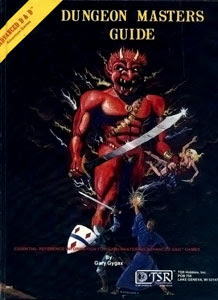
As you probably know, the appendix N is a list of "inspiration and educational reading" contained in the AD&D DMG. 

Reading the books listed will help you to get a glimpse into Gygax's mind and understand the origins of D&D and its settings.

I've been delving into a few of those books, and reviewing them in this blog. Some are great, some are weak. There are a few obvious omissions. Some people say this is simply a list of books Gygax had on his shelf, or his favorites, while others say the list is extremely curated and important.

This post organizes my reading of Appendix N stuff and will provide you a guide to delve into it if that is what you're looking for.

The entire text of the Appendix N is reproduced in the end of this post, with links to my reviews.

Valerie Valusek


The Basic D&D list


Tom Moldvay's Basic D&D has also an "Inspirational Source Material" list on B62. Here is a good analysis. 

There is significant overlap between the two lists. Appendix N includes a few authors not listed in Moldvay including Frederic Brown, August Derleth, Margaret St. Clair, and Stanley Weinbaum. [...]

Where Moldvay’s list eclipses Appendix N is in its completeness and attention to detail. [...] Gygax states that in some cases he meant to cite specific works, but when no works were listed he simply recommends all of a given author’s writings. [...] Moldvay appends “et. al” to at least as many authors as does Gygax, but always lists at least one, if not multiple, actual book titles for the reader.

Moldvay’s list is more comprehensive, while still managing to be confined to a single page in the basic rulebook. Some big names I’m very fond of jump out at me immediately: Moldvay lists Karl Edward Wagner (Bloodstone, Death Angel’s Shadow, and Dark Crusade), E.R. Eddison’s The Worm Ouroboros, Lloyd Alexander (The Book of Three, The Black Cauldon, the Castle of Llyr), Talbot Mundy’s Tros of Samothrace, Bram Stoker’s Dracula, Mary Stewart’s The Crystal Cave, The Hollow Hills, and The Last Enchantment, and T.H. White’s The Once and Future King. None of these appear on Appendix N. Perhaps most noteworthy, Moldvay also lists Clark Ashton Smith (Xiccarph, Lost Worlds, Genius Loci). Many have pondered why Gygax did not include the third of the Weird Tales holy trinity along with REH and Lovecraft, as Smith’s lush, ornate prose recalls something of Gygax’s writing style, and his dark necromancers and evil spellcasters seem like they could easily have stepped out of The Vault of the Drow.

Here is the entire list, with links to Wikipedia.

I will not delve too into Moldvay's list here, but will keep this is mind when the Appendix N lists an author but no books.

The 1976 list


Apparently, there was an earlier (1976) version of the Appendix N in "The Dragon". The most notable difference is the inclusion of Algernon Blackwoods. I don't see a huge influence in D&D, but he is an author I very much enjoy and recommend (try The Wendigo).


Where to start? My TOP TEN


If you want to explore the Appendix N, you could start with Gygax's favorites
de Camp & Pratt, R. E. Howard, Fritz Leiber, Jack Vance, H. P. Lovecraft, and A. Merritt.
My own favorites would be a different list, of course. I didn't include:

- de Camp & Pratt, as I haven't read it.
- A. Merritt, as I haven't enjoyed it as much as the others in my list (but read this).

Here is my current top ten; I will update it as I go. This is in no particular order. 

Some authors are better known for short stories that you can read in any order - I just selected a few of my favorites, but pick any collection of short stories you like, preferably containing these.
- Moorcock, Michael. Elric of Melniboné, Stormbringer.
- Tolkien, J. R. R. The Hobbit, The Fellowship of the Ring.
- Vance, Jack: The Eyes of the Overworld
- Anderson, Poul. The Broken Sword.
- Burroughs, Edgar Rice. A Princess of Mars.
- Leiber, Fritz. Favorites: “Ill-Met in Lankhmar”, “Lean Times in Lankhmar”, “Bazaar of the Bizarre”.
- Dunsany, Lord. Start with The Book of Wonder, especially "The Hoard of the Gibbelins", "How Nuth Would Have Practised His Art upon the Gnoles"; I am re-reading Dunsany's work to give more specific advice.
- Lovecraft, H. P. Favorites: The Call of Cthulhu, At the Mountains of Madness, The Colour out of Space, The Shadow over Innsmouth, The Dunwich Horror, In the Walls of Eryx.
- Howard, R. E. Favorites: Red Nails, The Tower of the Elephant, Queen of the Black Coast, The People of the Black Circle, Worms of the Earth. 

And two authors that are not in the appendix N (see About Clark Ashton Smith and Ursula LeGuin, below).

- Smith, C. A.. Favorites: The Vaults of Yoh-Vombis, The Beast of Averoigne, The Tale of Satampra Zeiros, The Empire of the Necromancers, The Isle of the Torturers, The Abominations of Yondo.

- Le Guin, Ursula K. - A Wizard of Earthsea.
Well, "top eleven" I guess...

Most books in my list are reasonably easy to find. Some of these books are in the public domain; you can find them for free online. Some short stories are also available online.

About "series"


The appendix N suggests a few series, e.g., "Mars series". Obviously, you do not need to read the whole series; start with the first book or a few short stories (as suggested above) and continue if you like the writing.

I did the same for my own reviews, writing my impression of the first/best stories rather than judging the series as a whole.

About Clark Ashton Smith and Ursula LeGuin


As I've mentioned elsewhere, the Appendix N has a few obvious omissions, the most notable being Clark Ashton Smith. Despite not being included, he is a favorite of mine and influenced many appendix N authors, and probably Gygax too.

Ursula LeGuin, on the other hand, is just a favorite of mine. The Wizard of Earthsea was one of my first fantasy books and it held up on a second reading decades later. Maybe not hugely influential to D&D, but I find the quality above average.

Both authors are included in the "Basic D&D list".

Inspiration versus literature


Some books in the list are good literature. Others are just fun. Some are not particularly fun or well-written, when compared to the best, but might still be worth checking out because they provide pieces of inspiration for Gygax or for your own game: monsters, settings, etc.

In my list of favorites, I tried to balance these three factors - which are mostly subjective - with the most obvious "these were the books I've enjoyed the most".

Which are YOUR favorites?


Let me know in the comments!


The original APPENDIX N...

...is reproduced below, with links to my impressions/reviews.

APPENDIX N: INSPIRATIONAL AND EDUCATIONAL READING
“Inspiration for all the fantasy work I have done stems directly from the love my father showed when I was a tad, for he spent many hours telling me stories he made up as he went along, tales of cloaked old men who could grant wishes, of magic rings and enchanted swords, or wicked sorcerors [sic] and dauntless swordsmen.
Then too, countless hundreds of comic books went down, and the long-gone EC ones certainly had their effect. Science fiction, fantasy, and horror movies were a big influence. In fact, all of us tend to get ample helpings of fantasy when we are very young from fairy tales such as those written by the Brothers Grimm and Andrew Lang. This often leads to reading books of mythology, paging through bestiaries, and consultation of compilations of the myths of various lands and peoples.
Upon such a base I built my interest in fantasy, being an avid reader of all science fiction and fantasy literature since 1950.
The following authors were of particular inspiration to me. In some cases I cite specific works, in others, I simply recommend all of their fantasy writing to you. From such sources, as well as any other imaginative writing or screenplay, you will be able to pluck kernels from which will grow the fruits of exciting campaigns. Good reading!
Anderson, Poul: THREE HEARTS AND THREE LIONS; THE HIGH CRUSADE; THE BROKEN SWORD
Bellairs, John: THE FACE IN THE FROST
Brackett, Leigh
Brown, Frederic
Burroughs, Edgar Rice: “Pellucidar” series; Mars series; Venus series
Carter, Lin: “World’s End” series
de Camp, L. Sprague: LEST DARKNESS FALL; THE FALLIBLE FIEND; et al
de Camp & Pratt: “Harold Shea” series; THE CARNELIAN CUBE
Derleth, August
Dunsany, Lord
Farmer, P. J.: “The World of the Tiers” series; et al
Fox, Gardner: “Kothar” series; “Kyrik” series; et al
Howard, R. E.: “Conan” series
Lanier, Sterling: HIERO’S JOURNEY
Leiber, Fritz: “Fafhrd & Gray Mouser” series; et al
Lovecraft, H. P.
Merritt, A.: CREEP, SHADOW, CREEP; MOON POOL; DWELLERS IN THE MIRAGE; et al
Moorcock, Michael: STORMBRINGER; STEALER OF SOULS; “Hawkmoon” series (esp. the first three books)
Norton, Andre
Offutt, Andrew J.: editor of SWORDS AGAINST DARKNESS III
Pratt, Fletcher: BLUE STAR; et al
Saberhagen, Fred: CHANGELING EARTH; et al
St. Clair, Margaret: THE SHADOW PEOPLE; SIGN OF THE LABRYS.
Tolkien, J. R. R.: THE HOBBIT; “Ring trilogy”
Vance, Jack: THE EYES OF THE OVERWORLD; THE DYING EARTH; et al
Weinbaum, Stanley
Wellman, Manley Wade
Williamson, Jack
Zelazny, Roger: JACK OF SHADOWS; “Amber” series; et al
The most immediate influences upon AD&D were probably de Camp & Pratt, R. E. Howard, Fritz Leiber, Jack Vance, H. P. Lovecraft, and A. Merritt; but all of the above authors, as well as many not listed, certainly helped to shape the form of the game. For this reason, and for the hours of reading enjoyment, I heartily recommend the works of these fine authors to you.”
– E. Gary Gygax, 1979, AD&D Dungeon Masters Guide, p. 224

Sunday, January 28, 2024

Wilderness level tables

Just a quick update to the last post.

Another method of achieving a similar result, if you prefer using a table to adding dice, etc.

Roll 1d20, add the number of hexes away from civilization (maximum 10), and check the table below to see how many monsters appear. 

E.g., if you roll a total of 12 and the "number appearing" is usually 1d6, then 3 monsters appear.

Special cases:

Rolling 25 or more: There is a chance that you've found a monster lair (25% or whatever the GM deems appropriate).

Lairs: if you find a lair, roll number appearing as usual (for example, a lair of orcs containing 5d6x10 orcs - just roll 5d6x50 regardless of the initial result, or keep the initial result as a minimum - see the examples below).

0 monsters appearing: either the encounter doesn't happen, or the monster is of a smaller/weaker variant  (whatever the GM deems appropriate).

Natural 20: if you roll a natural 20, roll again and add 10.

Natural 1: roll again and subtract 10.


Examples:

- You find some ogres (number appearing: 2d6), 8 hexes away from civilization. You roll 1d20+8, and get a 21. This means 5 ogres were found for each d6, for a total of 10.

- You find some orcs (NA: 1d6x10), 5 hexes away from civilization. You roll 1d20+5, but you get a natural 20. Then you roll again with a +10 bonus, getting a total of 31. This means you found at least 70 orcs, but there is a chance you have found their lair. The DM decides this is a viable place for an orc fortress and roll 5d6x10, getting 150 orcs.

- You encounter dragons  (NA: 1d4), 2 hexes away from civilization, but you roll low and the table indicates 0 dragons. The GM decides wether this encounters doesn't happen (e.g., you see a dragon flying far away in the distance, you find dragon tracks, etc.) or if you find a smaller dragon, drake, etc.

Variations:

You could use 2d10 to make the outcomes more predictable.

You can use the table below if you want fractions; this is useful in multiple situations (e.g., when you find 2d6 ogres or 1d6x10 orcs, using fractions gives you more nuance).

Yes, my version of excel uses commas instead of decimal points.

Round to the nearest integer.


The formula:

The formula I used is: D*R/25.

D = Dice size (4 for a d4, 6 for a d6, etc.).

R = Result of d20+hexes.

Wednesday, January 24, 2024

Wilderness levels

This is an idea I have mentioned before. I've been thinking about it for a while.

Despite my dislike of "encounter balance" as it is commonly understood (i.e., in relation to the PCs), I appreciate the need of letting the PCs know - and, ultimately, choose - what kind of encounters they are willing to face (of course, their place we will often go awry).

Traditionally, "encounter balance" in old school D&D is not calculated in relation to the PCs, but in relation to dungeon levels. So, the third level in a dungeon has harder encounters than the second, and so on.

I have several issues with this (e.g., each dungeon should have its own tables, how do dragons live so deep if there are no apparent big entrances), but that is another subject. 

My main concern right now is encounter balance in the wilderness, something I also already analyzed here.

Basically, B/X has TWO "encounter balance" tools for the wilderness. First, do not go unless you're level 4. Second, some terrains are more dangerous than others (although there is an good chance of finding 1d4 dragons even in settled lands...).

This is not satisfactory because it lacks the nuance of "dungeon levels" - and also because it stops levels 1-3 PCs from traveling around to get a "taste" of what to come.


The obvious solutions is analogous to dungeon levels - the farther you are from civilization, the greater the wilderness level (you are "deep" in the forest, etc.).

To avoid creating entirely new tables (something that 5e almost manages to pull off with XGtE and ToA, to some extent), we could adapt exiting tables for these idea.

For example: roll 1d20 for each hex to the nearest the nearest civilization/ safe outpost (maximum 10). 

This is a percentage of "number appearing". 100% means the maximum number appears, but that will be rare. When you get "1d4 dragons" it is more likely a single dragon unless you're a few days from civilization. Smaller numbers (e.g., 10%) usually indicate a single monster (but see "what if number appearing is one", below, for alternatives).

To add some spice, 20s explode; roll again and add 10, "ad infinitum". If the FIRST dice rolled is a natural 1-2, the rule is simply ignored - roll 1d4 to find how many dragons. 

Even in the safest areas there is a chance of fighting a group of powerful monsters, but it is small (also, they might be there for a reason...).

[Alternatively, if you don't want to throw that many dice, just count some of the d20s as 10 without rolling. For example, for six hexes roll 3d20+30].

What if the result is over 100%? It is up to the GM. Rolling 130% might indicate a 30% of having found an actual lair (with up to five times more monsters), or just finding five dragons instead of 1d4.

What if "number appearing" is "one" (e.g., hydra)? In this case, the percentage indicates a chance of the encounter happening at all. An hydra next to a city? Unlikely to happen. Other alternatives would include changing the number of heads or even HD for some creatures (a dragon found right next to town was undetected for being too small, ).

What about humans? Humans and maybe some humanoids, of course, are exempt from this system; they are likely to be encountered near civilization. Elves, etc., will be more or less common according to setting.

[EDIT: as suggested in the comments, maybe changing die size could serve a similar function. So, 1d4 dragons become 1d2 near civilization, 1d3 a bit further away, then 1d4 and even 1d6. Come to think of it, this looks like a more elegant solution. Maybe results that are greater than the usual maximum  - e.g., rolling 6 for dragons - indicate a chance of lair].

Building a castle or keep is automatically useful, as it makes travelling less dangerous. Roads could provide a similar result (especially if patrolled), although traveling faster is useful enough.

Add modifiers to taste: greater chance of encounter near the darkest dungeons/castles, smaller chance if travelling light with a small group, more giants in the giant territory, etc.

A more nuanced version would be creating "danger zones", each adjusting number appearing. Ideally, each area would have its own danger "level" and encounters, so that we are not "balancing encounters" but "balancing encounter tables".

Not all encounters in the same table are equal, of course. Instead, as suggested in AD&D 2e, some creatures are RARER than others regardless of HD. 

It is about a fictional world - not about a game of HDs.

Of course, if you're using the tables in Xanathar's (they are decent), this is even easier: maybe 1d8+hexes, with 1-4 meaning tier 1, 5-10 tier 2 and so on.

[Notice that in 5e, similarly to B/X, Pcs of level 1 and 2 might have a hard time anyway, although the difference is smaller].

Another thing to consider, maybe in future post: cities and outpost, despite being static, might have occasional random encounters of their own (or should this be part of a "disaster check" table?). that small village encountered 4 dragons when the PCs were elsewhere? It might be toast by now...

Additional reading:

Monday, January 22, 2024

Clans of Amarod

These area few clans for my current hexcrawl. If my players read this: there are dozens of clans, you might encounter these ones or not. 

Otherwise, feel free to use them in your own settings! Some entries might be specific to my setting, adapt as needed.

One thing that occurs to me is that I should have decided this beforehand - see this. I think I'm doing this for every setting from now own, as I cannot stand orcs anymore (I unfortunately already introduced dwarves and kobolds from published modules - dwarves are useful, as goblins IMO, but kobolds scream "we are in D&Dland" for me).

I think you should try it too - even if you like orcs, it is nice to have distinct clans, some more aggressive than others. And having FEWER creatures gives a setting a stronger theme and feel.

The last part is from Dark Fantasy Places (which you can get for free/PWYW), and not particular to this setting. I pasted here for convenience.


Uzumaki (goblin cannibals)
One of the most hated groups. Easily recognizable for their sharp teeth and spiral-shaped ritual scars. Hide in the woods, attack on sight, and laugh as they fight to death. Probably insane. When fighting other goblins, they prefer capturing to destroying, and will buy/ "rescue" goblin slaves if they are available.

Moonchildren (tabaxi mystics)
Curious students of the occult. Wear silver amulets, usually moon and starts. Like spellcasters, enjoy wine and singing. Collect books and memorize songs, exchange information. Usually nocturnal.

Ironfolk (silent dwarves)
They do not speak much Common, but do not look for trouble either. Found in mines and forests. Use body paint, usually white, with red and black details. Not much armor (bare chested), but carry heavy iron weapons. Their caves are decorated with stone statues - rectangular cuboid carved to resemble dwarves.

Skullfolk (human skeletons)
These thin folks use white and black paint to resemble skeletons when they are in battle (or raiding, invading, stealing, etc.). They are pale and have no body hair at all. A few of them cut their own noses. Their weapons are poisoned and they are extremely hostile when in paint (50% chance).

Dragon claw (wild elves)
These tattooed, scantly clad elves have a deep respect for dragons, although they recognize not all dragons are good. They are distrustful of anyone wearing heavy armor, as these are more common in the invaders. Discreet body paint, long braided hair, curved blades. Nomadic, claim no lands as their own.

Glowtoads (shy frogfolk)
They live in the marshes and avoid getting close to civilization. Sometimes they use special paint (usually curves and dots) that make them glow at night. Will use as a diversion tactic when needed. Otherwise, they are usually friendly to humans but hate mantisfolk.

Warp folk (human mutants)
These misshapen humanoids worship a green rock which has a strange glow. A few generations of natural selection made them a bit more resilient to negative mutations, but they still look ugly (scaly skin, asymmetrical features). Feared and despised by most, but not actually as aggressive as other clans.

Sky terrors (cupendiepe hunters)
Nocturnal, blood-drinking, winged humanoids that fight with moon-shaped axes. Very aggressive. Live in caverns near mountains tops, steal treasure for no apparent reason.

Firestarters (human/goblin pyromaniacs)
The worshippers of the Lord of Fire cover their bodies in ashes and burn their enemies to commemorate victories. Fight with oil flasks and fire traps. Occasionally worship at the crater of an extinct (?) volcano, but the location is secret to everyone except their shamans, who have been "touched by fire" (burn scars).

Greenscales (powerful lizardfolk)
The greenscales are the most powerful lizardfolk clan in the land. They take a nuanced view of the invaders; they know they are feared, but can make powerful allies. They might engaged peacefully with smaller groups. They were enslaved under some of the ruined empires and they hate magic and the cult of Apopep with its corrupted sorcerers.


Random clans

Type (1d20)
1. Tabaxi
2. Lizadfolk
3. Goblin
4. Cupendiepe
5. Dwarves
6. Elves
7. Mantisfolk
8. Frogfolk
9. Kobold
10+. Humans

Looks (1d20)
1. Naked
2. Tattoos
3. Body paint
4. Skulls
5. Sharp teeth (in mouth or necklace)
6. Demon mask
7. Colorful silk
8. Spikes
9. Ritual scars
10. Reptile hide 
11. Camouflage
12. Feathers
13. Wood armor
14. Jewelry
15. Snake motifs
16. Jaguar skin/motifs
17. Shell necklace
18. Light robes
19. Colorful hair/ beads
20. Braids

Like/dislike (1d20) - [or: respect, fear, worship, etc.]
1. Heavy armor
2. Strangers
3. Cannibalism
4. Spellcasters
5. Nearby tribe
6. Dragons
7. Castles
8. Undead
9. The Water Lord (main Lawful deity)
10. Alcohol
11. Commerce
12. The Ruined Empire (Apiaka, etc.)
13. Lord Belarte (or other nearby leader)
14. Monsters (like: 50% chance of pets/mounts)
15. Hallucinogenic plants/fungi
16. Other species (like: 30% chance of mixed clan)
17. Mercenaries / dungeon delvers (like: can be hired)
18. Agriculture
19. "The Natural Order"
20. Slavery/slavers

Some additions and variations

Tabaxi. Cat, cougar, red, blueish. A rare lionfolk might be found in the North. Many tell legends of ruined Muru, the circular city that stands in ruins - but ascended, "in spirit", to higher planes.
Lizadfolk. Red, mustard, blue, dwarf, horned, rarely white, black, chameleon. Most distrust magic, but a few are loyal to Apopep and the serpent-people that enslaved them in the past.
Goblin. Alchemists, tree-jumpers, burrowers (gray and earthy).
Dwarves. Albino, explorer, slaver, merchant.
Elves. Types vary, but mostly the typical "wood elves", closer to nature, or "underground elves" that enjoy tricks and illusions. Both are familiar with fey, dryads, etc.
Mantisfolk. Dark, mustard, red, green. A few clans are psionically held to a "hive mother" like bees and incapable of independent thought while near. Some gain individuality to perform outside jobs, and some gain it permanently due to genetics, accidents or death of a hive mother.


Morlocks.

Other clans

Orcs - None. Replace by lizardfolk.
Hobgoblins - None. Replace by morlocks, pictured above. As hobgoblins, "dwell underground, but commonly seek prey above ground."
Aaracroka - None. Replace by cupendiepe, a more aggressive species of bat-people.

Etc.

Villages & Cities

From Dark Fantasy Places. Unlikely to be used until the PCs decide to interact with one of the clans.

d20 Appearance
1. Intertwined with trees
2. Buried
3. Lifted from the ground
4. Made of moving tents
5. Camouflaged
6. Suspended over water
7. Built amidst ancient ruins
8. Huge and mostly empty
9. Dug up in rocks
10. A single building
11. On a mountain top
12. Brightful colors
13. Tall buildings
14. Misty
15. Narrow streets
16. Inside a crater
17. Constantly flooded
18. Poor and ruined
19. Beautiful and frail
20. Heavily fortified

d20 Society
1. Property is communal
2. No concept of privacy
3. Identity is defined by masks
4. Rigid protocol for every conversation
5. Universal vow of silence
6. Adults are cast out
7. Appropriate clothing is mandatory
8. Visitors have no rights
9. All burials must be in pairs
10. Children are raised by all
11. A proper season for each action
12. Travelers welcome for a single day
13. Weapons are forbidden
14. “Couples” are always three
15. Those who can’t fight must serve
16. No activities during daytime
17. Violence is never the answer
18. Everything is permitted
19. Might makes right
20. Casual cannibalism

d20 Problems
1. Besieged by monsters
2. Ruled by tyrants
3. Plagued by poverty
4. Infected by disease
5. Fiercely territorial
6. Infiltrated by demons
7. Filled with criminals
8. Resentful of outsiders
9. Ongoing power struggle
10. Cursed with madness
11. Violently expansionist
12. Falsely utopian
13. Mutated by Corruption
14. Malignant religion
15. Screwed morals
16. Widespread panic
17. Hopelessly defeated
18. Hiding dark secrets
19. Inhabitants cannot leave
20. Periodic human sacrifice

Sunday, January 14, 2024

Black God's Kiss - brief review

"Black God's Kiss" (1934), by C.L. Moore, is a short story about Jirel of Joiry, an (apparently) French female warrior, who finds herself defeated in her own kingdom and imprisoned by an evil enemy that is eager to humiliate her. Full of hatred, she decides to go into the hellish Abyss beneath the castle to find a useful weapon against her rival...


The plot is reminiscent of Worms of the Earth by Robert E. Howard. The writing  is also similar to Howard in tone, mixing action with weirdness and cosmic horror. 

Jirel is not quite a "female Conan" (nor the stereotypical princess, damsel, or amazon); she is strong and ferocious, but has enough distinguishing characteristics to be interesting. For example, she is a Christian, and fully knows that she is not risking only her life but also her soul - even if she succeeds on her quest. Also, apparently the first notable S&S female protagonist (probably some of the best female S&S author I've read, too).

As far as REH-inspired works go, this one is pretty good. The ending was a bit vague (probably explained in the next story), but other than than it could be a strong entry to any REHish collection. The pacing is very fast, the setting is interesting - and could certainly serve as inspiration for your D&D games.

For some reason, I thought this was part of the Appendix N, but, surprisingly, it isn't. It would be a good addition for lots of reasons: time of publishing, theme, quality. It is better than average when compared to the other books on the list. I can only assumed Gygax hadn't read it or liked it.

It is a short book, so there is no point in writing a long review. Maybe I'll do that after I've read the other books in the series.

For now, I'll just recommend you check it out!